Exterior Walls, Crawlspaces, and Garages: Where Southern Tier Pipes Freeze First and How to Protect Them Before December
LouAnn Sheldon October 15, 2026 6 min read
It usually happens on the first truly bitter morning of the year. You turn on the kitchen faucet and get a trickle, or nothing at all. Or worse, everything seems fine until the afternoon thaw, when a water stain starts spreading across the basement ceiling.
Frozen pipes are one of the most common winter emergencies we handle, and many of them could have been prevented with a little prep in October or November. Older Southern Tier homes, with their minimal wall insulation and drafty basements, are especially vulnerable.
Our family-owned team at Action Plumbing, Heating, and Cooling has been repairing and preventing frozen pipes across Broome County since 2006. Here's how to prevent frozen pipes in Binghamton homes, where to focus your attention, and when it's time to call a plumber.
Why Some Pipes Freeze While Others Don't
A pipe doesn't freeze because your house is cold. It freezes because cold outdoor air is reaching it directly. That's why the same home can have a perfectly comfortable living room and a frozen line under the kitchen sink.
When water freezes, it expands. The ice itself usually doesn't burst the pipe. Instead, pressure builds between the ice blockage and the closed faucet, and the pipe splits somewhere along that stretch. Pipes in unheated spaces are generally at risk once outdoor temperatures drop to around 20°F, which happens plenty of times every winter here.
The Five Places Southern Tier Pipes Freeze First
In our experience, frozen pipes almost always show up in the same handful of spots:
- Exterior walls. Kitchen and bathroom sinks on outside walls are the top offenders, especially in 1960s through 1980s homes with thin wall insulation.
- Rim joists and crawlspaces. Where the house frame sits on the foundation, cold air leaks in and chills nearby pipes.
- Attached garages. Pipes running through or along a garage wall are exposed every time the door opens.
- Outdoor faucets. The spigot and the short pipe feeding it are easy to forget until they crack.
- Additions, porches, and bump-outs. These spaces were often added later with less insulation than the original house.
The type of pipe matters too. Older galvanized steel and copper are less forgiving than PEX when water freezes. If you're not sure what's behind your walls, our guide to galvanized, copper, and PEX pipes in older Southern Tier homes explains what to look for.
Your Fall Frozen Pipe Prevention Checklist
Most of these tasks take an afternoon and cost very little. Knock them out before the first hard freeze:
- Shut off and drain outdoor faucets. Disconnect garden hoses, close the interior shutoff valve, and open the outside spigot to let it drain. Our guide to hose bibs and outdoor spigots covers what to check.
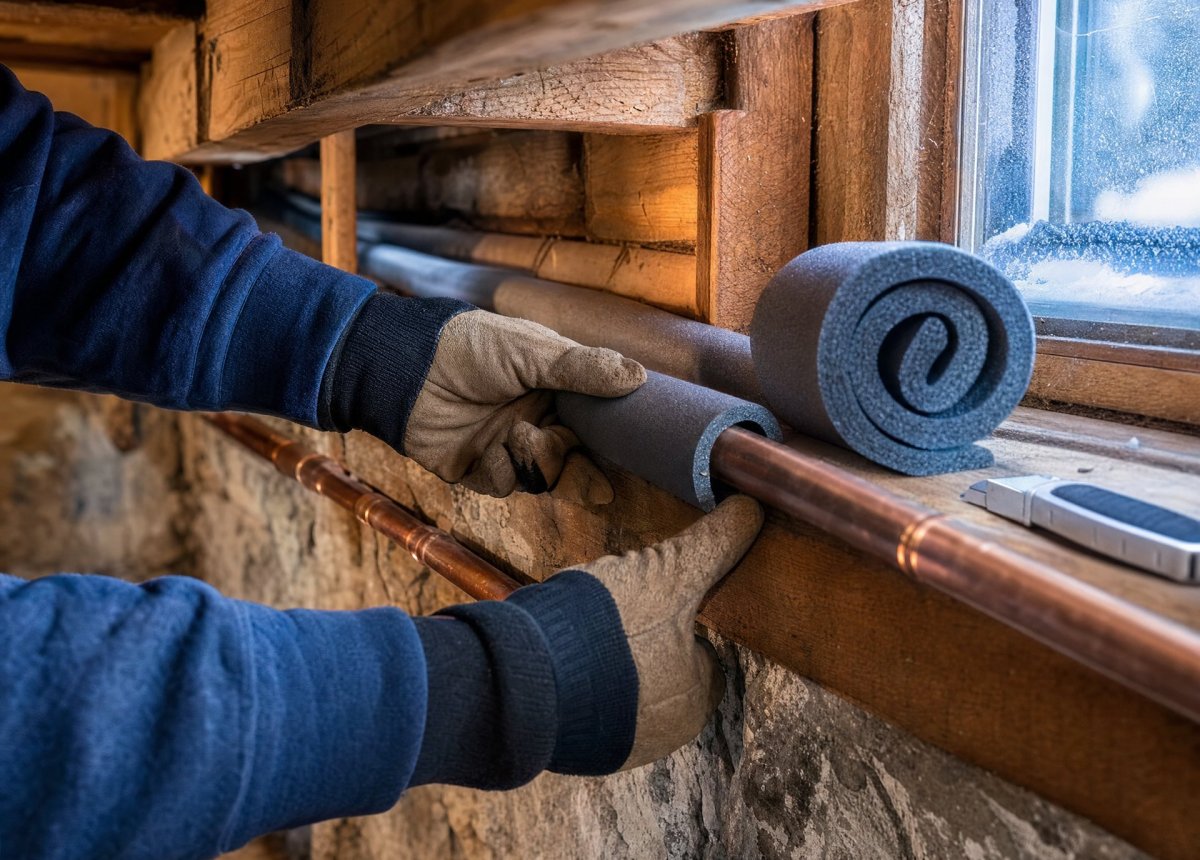
- Insulate exposed pipes. Foam pipe sleeves from the hardware store work well in basements, crawlspaces, and garages.
- Seal air leaks. Caulk or spray foam gaps along the rim joist and around pipes that pass through exterior walls.
- Keep the garage door closed. This matters most if water lines run through or near it.
- Find your main water shutoff. Make sure everyone in the house knows where it is and that the valve actually turns.
- Keep the heat on when you're away. Don't set the thermostat below 55°F, even for a weekend trip.
On the coldest nights, open the cabinet doors under sinks on exterior walls and let those faucets drip slightly. Moving water is much harder to freeze, and a drip relieves pressure if ice does start to form.
One important warning: never use an open flame or torch to thaw a pipe. It's a serious fire risk and can damage the pipe itself. Space heaters should only be used with caution and never left unattended.
What to Do If a Pipe Freezes Anyway
Even with good prep, a pipe can still freeze during a cold snap. If a faucet suddenly slows to a trickle, leave it open, apply gentle heat with a hair dryer working back from the faucet, and check for any signs of leaking. Our post on what to do if you have a frozen pipe walks through the steps in more detail.
If you can't locate the frozen section or can't reach it safely, call for professional frozen pipe repair. Thawing a pipe the right way helps you avoid a burst once the water starts moving again.
When to Call a Professional
Some frozen pipe problems go beyond what a homeowner should tackle. Call a plumber if you notice any of the following:
- The same pipe freezes every winter
- Water stains, bulging drywall, or a hissing sound after a thaw
- Your water meter keeps moving when every fixture is off
- Your main shutoff valve is stuck or leaking
A pipe that freezes year after year usually needs a permanent fix, like rerouting it away from an exterior wall. Our pipe replacement and repair team can handle that. And because a slow leak after a thaw is easy to miss, it's worth knowing the warning signs of a hidden water leak. If a pipe has already burst, our 24/7 emergency plumbers are ready to help.
Prevent Frozen Pipes in Your Binghamton Home This Winter
A few hours of prep this fall can save you from a cold morning without water, or a costly repair after the thaw. Focus on exterior walls, rim joists, garages, and outdoor faucets, and know where your main shutoff is before you need it.
We serve homeowners throughout the region, from Binghamton plumbing customers to families in need of plumbing service in Windsor. Our family-owned team offers fair, transparent pricing. Call (607) 205-1177 or request an estimate online.