The Pipe Nobody Thinks About: Warning Signs Your Main Water Line Is Failing
LouAnn Sheldon September 8, 2026 7 min read
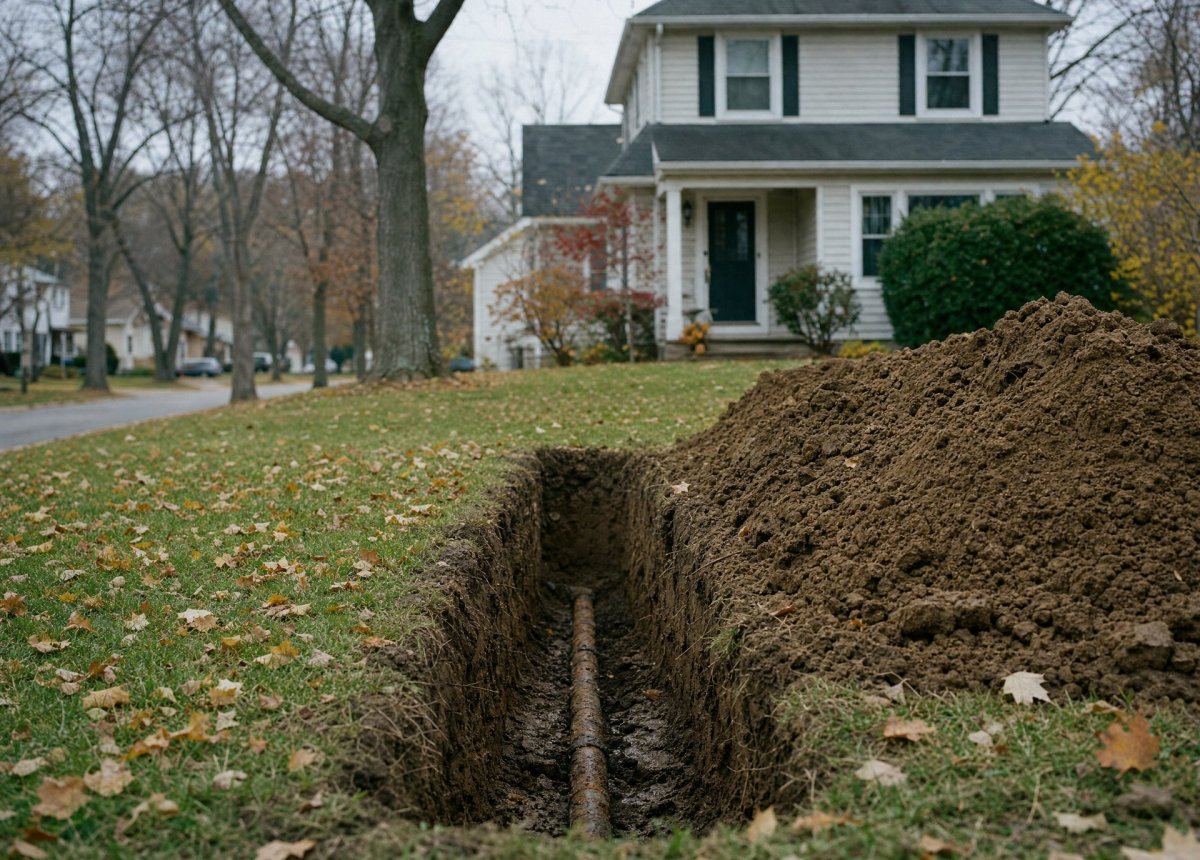
Every drop of water in your house arrives through one pipe. It runs from the municipal main under the street, across your front yard, and through the foundation wall into your basement, and unless something goes wrong you will never think about it once in fifteen years of homeownership.
That’s the problem. The water service line is buried and outside most homeowners’ mental map of the house. When it starts to fail, the signs are subtle enough to get blamed on something else, and by the time the failure is obvious you’re facing an excavation and a bill that arrived with no warning.
Action Plumbing, Heating, and Cooling has been replacing water service lines across Greater Binghamton since 2006. Here’s what to watch for, why fall is the right time to pay attention, and what a replacement actually involves.
What’s Buried in Your Yard
The age of your house tells you most of what you need to know. Homes built before roughly 1960 in this area often have galvanized steel service lines, which corrode from the inside out and have a practical life of 40 to 60 years. Every one of those is now past it.
Mid century homes typically got copper, which lasts longer but is vulnerable to soil conditions and electrolysis. Anything built or re-plumbed in recent decades likely has polyethylene or PEX, which doesn’t corrode at all.
The same question applies underground as inside your walls. Our guide to galvanized, copper, and PEX in older Southern Tier homes walks through how to identify what you have and what it means for the rest of the system.
Six Signs the Line Is in Trouble
A service line rarely fails all at once. It gives you months of hints first.
- Pressure that has dropped gradually. Not a sudden change, but the slow realization that the shower isn’t what it used to be. Corroding galvanized pipe narrows from the inside until the opening is a fraction of its original diameter.
- Rusty or discolored water, especially in the morning or after the house has been empty. If it clears after running the tap for a minute and affects every fixture, the source is upstream of your interior plumbing.
- A water bill that climbed without a change in habits. A leak in the service line is on your side of the meter and on your bill.
- A green stripe or soggy patch in the lawn that stays wet through a dry stretch, often running in a straight line from the street toward the house.
- The sound of running water when every fixture in the house is off.
- A dip, sinkhole, or sunken spot in the yard or driveway where soil has washed away beneath the surface.
Any one of these on its own could mean something else. Two or three together point pretty firmly at the line. Our post on six warning signs of a hidden water leak covers the interior version of the same detective work, and our pipe leak repair service includes the leak detection equipment that locates a break without digging up the whole yard first.
Why September Is the Time to Deal With It
A compromised water line becomes a much bigger problem once the ground freezes. Frost drives down several feet in a Southern Tier winter, and a pipe that’s already thin walled or sitting at marginal depth is far more likely to fail under it.
A failure in January is the worst version of the job. Excavation through frozen ground costs more, takes longer, and tears up more of your yard than the same work in September. And unlike a frozen pipe inside the house, you can’t thaw a service line with a hair dryer and a space heater.
Waiting has a cost that compounds. We covered the general version of this in our post on the hidden cost of ignoring minor plumbing problems, and the water service line is the clearest example of it on the whole property.
What Replacement Actually Involves
Homeowners picture a backhoe and a ruined front lawn. Sometimes that’s the reality, often it isn’t.
The first step is locating the problem precisely, which determines whether you need a spot repair or a full replacement. If the line is sound apart from one break, a targeted excavation may be enough. If it’s corroded end to end, replacement is the only repair that lasts.
For a full replacement, trenchless methods can pull new pipe along the existing path with access pits at each end rather than an open trench. That depends on the route, depth, soil, and what else is buried nearby, and we’ll tell you honestly which approach your property allows.
Either way, the work involves coordinating with the water authority, pulling the required municipal permit, and restoring the site when the pipe is in. Our water line installation service covers the process end to end, and for the interior side of an aging system our pipe replacement and repair team handles the branch lines that often need attention at the same time.
What to Do Right Now
Take ten minutes this weekend. Check pressure at an outdoor spigot, compare your last three water bills, and walk the strip of lawn between your house and the street looking for grass that’s greener or ground that’s softer than everything around it.
If something looks off, get it diagnosed before the ground freezes. An assessment either confirms the line is fine or gives you a plan and a number you can budget around.
We’re a family owned company with NATE certified technicians, serving Binghamton, Endicott, and the surrounding towns since 2006. When a line lets go without warning, our 24/7 emergency plumbing service is available around the clock.
Call (607) 205-1177 or request an estimate online. We’ll show you what we find, explain your options in plain language, and let you decide.