Tree Roots in Your Sewer Line: Why Summer Is When Southern Tier Homeowners Discover the Problem
Action Plumbing, Heating & Cooling July 28, 2026 8 min read
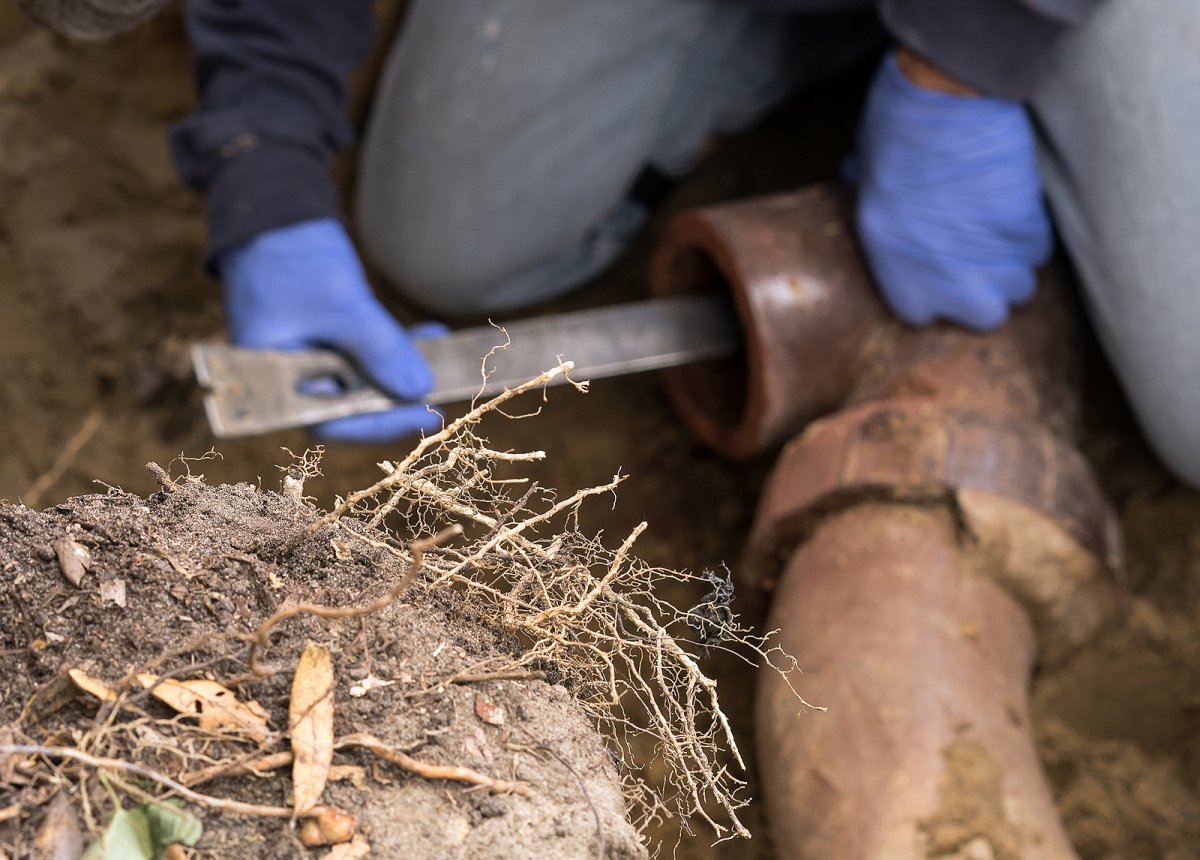
The toilet gurgles when the washing machine drains. A slow drain in the basement backs up every few weeks even though you’ve poured drain cleaner down it twice. That old maple tree in the front yard is beautiful, but you’ve started to wonder if there’s a connection. If any of that sounds familiar, tree roots may have found their way into your sewer line — and summer is exactly when the problem tends to reveal itself.
Tree root intrusion is the number one cause of residential sewer line failure in the Southern Tier. Older homes across Binghamton, Endicott, Johnson City, and Vestal often still have the original clay tile, cast iron, or Orangeburg sewer laterals from the 1950s, 60s, and 70s. These materials develop cracks and loose joints over decades, and tree roots — always searching for water and nutrients — find them, grow into them, and eventually choke off the pipe.
At Action Plumbing, Heating, and Cooling, we’ve been diagnosing and clearing sewer line root problems across the Southern Tier since 2006. Here’s what you need to know about the warning signs, why summer makes it worse, and what your options are when roots have made themselves at home in your sewer main.
How Roots Get Into a Sewer Line in the First Place
Sewer lines carry warm, nutrient-rich water — exactly what a tree root wants. Roots don’t break through solid, sealed pipe, but they’re remarkably good at finding the tiniest openings and expanding them. Common entry points include:
- Clay tile joints. The gaskets between clay pipe segments degrade over 50–70 years, opening pathways for hair-thin root tendrils to sneak in.
- Cracked cast iron. Older cast iron pipes corrode from the inside out, eventually cracking and letting roots in.
- Orangeburg pipe. This tar-and-paper composite pipe was widely used in Southern Tier homes from the 1940s through the 1970s. It deforms, collapses, and delaminates over time, making it especially vulnerable.
- Old repair collars. Where the sewer connects to the city main or crosses under the foundation, older seals often fail first.
Once inside, a root grows quickly, forming a mat that catches toilet paper, grease, and everything else headed down the line. What starts as a slow drain becomes a full backup, sometimes without much warning in between.
Why Summer Makes Root Problems Worse
Root activity peaks during the growing season. From late spring through early fall, trees are pulling as much water as they can from the soil. If your sewer line is already leaking even slightly, that’s a beacon — roots grow toward it faster and expand more aggressively than in winter.
Summer thunderstorms in Broome County also stress the sewer system. Heavy rain saturates the ground, backs up city sewer mains, and puts extra pressure on already-compromised residential lines. Homeowners often discover their sewer problem right after a big storm, when a partially blocked line finally gets pushed past its limit.
Warning Signs to Watch For
Root intrusion rarely announces itself all at once. It builds gradually, and the earlier you catch it, the more options you have and the less it costs to fix. Watch for:
- Multiple slow drains at once. One slow sink is usually a local clog. When the tub, toilet, and basement drain are all sluggish, the blockage is deeper in the main line. Our post on slow drains throughout the home covers this in more detail.
- Gurgling toilets and drains. Air trapped by a partial blockage escapes with a distinctive bubbling sound — especially when another fixture is running. See our guide to plumbing noises you shouldn’t ignore for what different sounds indicate.
- Frequent backups. If you’re snaking the same drain every few months, roots may be the reason it keeps coming back.
- Sewage smell in the yard or basement. A cracked, root-invaded pipe leaks sewage into the surrounding soil.
- Unusually green patches in the lawn. Grass over a leaking sewer line grows greener and faster than the rest of the yard.
- Depressions or sinkholes. Soil washes into a collapsed section of pipe, leaving a low spot in the yard above.
Our detailed guide on telltale signs a sewer line needs repair or replacement walks through each of these in more depth. Ignoring these warnings turns a manageable problem into a full pipe replacement — and our post on the hidden costs of ignoring minor plumbing problems explains why waiting almost always costs more.
How Roots Get Cleared — and Why Hydro Jetting Changes the Game
The traditional approach to root intrusion was mechanical rooter service — a rotating blade on a cable that cuts through the root mass. It works, but it’s temporary. The roots grow back, often within 6–18 months, and you’re back where you started.
Hydro jetting is a much more effective approach. High-pressure water — up to 4,000 PSI — scours the entire inside of the pipe, cutting through roots and blasting away the grease, sediment, and buildup that gave them something to catch on in the first place. The pipe comes back to nearly new condition inside, and the pause between root regrowth is significantly longer. Our post on what hydro jetting actually is explains how the process works and when it’s the right choice.
For minor root intrusion, hydro jetting alone often solves the problem for years. For heavier damage, we combine jetting with a camera inspection to determine whether the pipe itself needs repair or replacement.
When Repair or Replacement Becomes the Right Call
Sometimes the roots aren’t the real problem — they’re just the symptom. If your pipe is cracked, collapsed, or made of failing Orangeburg, cleaning it out only buys you time. Modern sewer line repair techniques include trenchless options that replace or reline the pipe without digging up your entire yard.
A camera inspection tells us exactly what condition your line is in and what repair approach makes the most sense. For older homes in Endicott and Johnson City especially, knowing what’s under your yard before it fails is worth every penny.
Why Action Plumbing Is the Right Call
We’ve been solving sewer line problems for Southern Tier homeowners for nearly two decades. Our NATE-certified technicians use camera inspection and hydro jetting equipment that older mechanical rooter services can’t match, and we give you honest recommendations without pressure. When it’s a real emergency — sewage backing up into the house, for example — our 24/7 emergency plumbing service is ready.
Common Questions About Tree Roots in Sewer Lines
Catch the Roots Before They Catch You
A slow drain today is a full sewage backup tomorrow. Roots don’t stop growing on their own, and every month you wait makes the problem more expensive to solve. If you’ve been seeing any of the warning signs we’ve covered — gurgling toilets, multiple slow drains, or backups that keep coming back — getting a camera inspection now can save you thousands and prevent a real mess later.
Call Action Plumbing, Heating, and Cooling at (607) 205-1177 or request an estimate online. We serve Binghamton, Endicott, Johnson City, Vestal, and the surrounding Southern Tier communities with the honest, experienced sewer service we’ve built our name on since 2006.