Before You Flip the Switch: The Furnace Safety Check Every Southern Tier Homeowner Should Do This Fall
LouAnn Sheldon September 2, 2026 7 min read
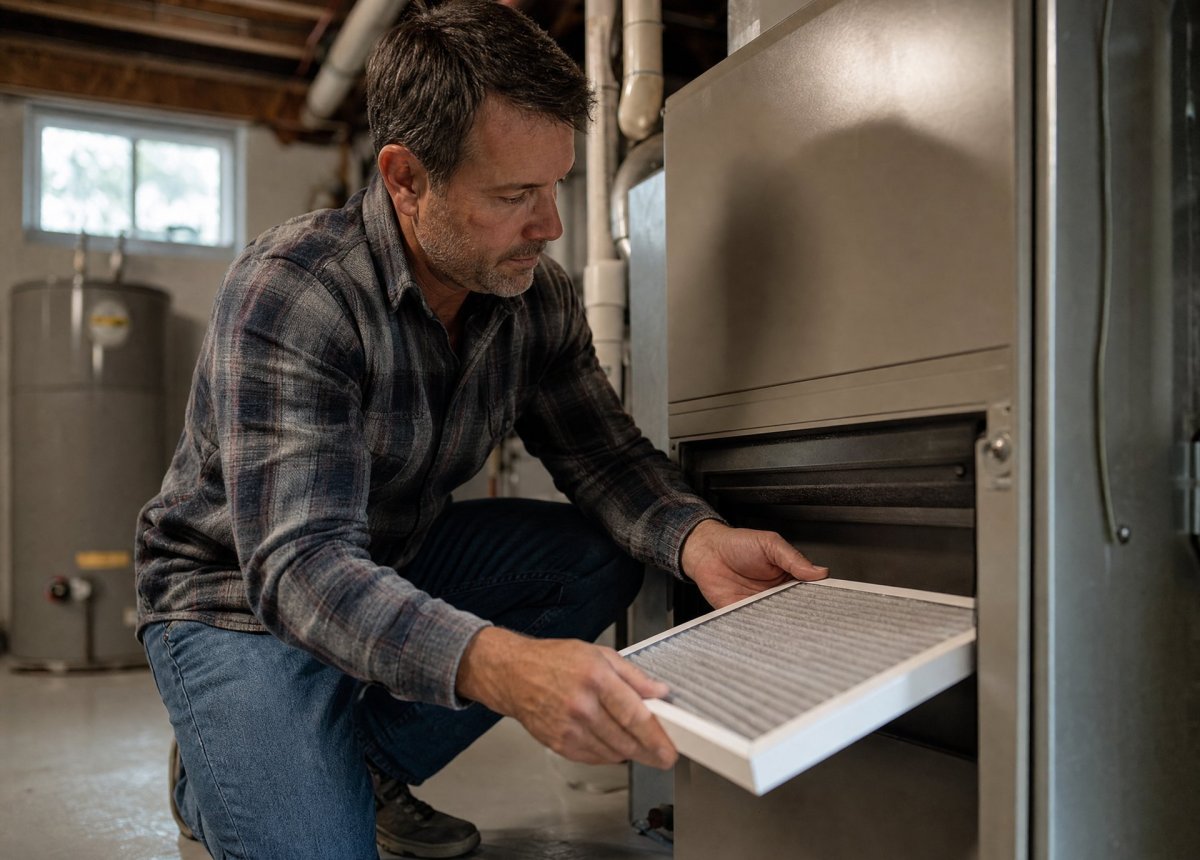
The first truly cold night in the Southern Tier always seems to show up before anyone is ready for it. You wake up at 5:45 in a house that feels ten degrees colder than it did when you went to bed, walk over to the thermostat, and push the heat on for the first time since April.
Most of the time nothing dramatic happens. You get that familiar smell of dust burning off the heat exchanger and the house warms up. But that first startup is also when a problem that developed quietly over the summer announces itself, and a few of those are genuinely dangerous.
Action Plumbing, Heating, and Cooling has been serving Greater Binghamton since 2006, and our NATE certified technicians see the same handful of issues every single October. This guide walks you through what you can safely check yourself before you turn the heat on, what the warning signs actually mean, and when it’s time to stop troubleshooting and call for professional furnace repair in Binghamton.
Why the First Startup of the Season Is the Riskiest
Your furnace sat untouched for roughly five months. Dust settled on the burners, mud daubers found the exhaust vent, and any hairline crack in the heat exchanger had a full season of thermal cycling to grow a little wider.
None of that is visible from the thermostat. The difference between a furnace that’s working and one that’s working safely is not something you can hear from the living room, which is exactly why a fall check matters more than a mid-winter one.
The Ten Minute Walkthrough You Can Do Yourself
You don’t need tools or technical knowledge for any of this. Do it on a Saturday morning before the first cold snap, not during one.
- Clear three feet of space around the unit. Paint cans, storage totes, and stacked boxes block the combustion air your furnace needs and create a fire hazard. Basements collect clutter all summer without anyone noticing.
- Change the filter. A restricted filter makes the system run hotter and longer, which stresses the heat exchanger. One inch filters should be checked monthly through the heating season.
- Look at the exhaust vent outside. High efficiency furnaces vent through white PVC pipes on the side of the house. Clear any wasp nests or leaves, and note where it sits so you can keep it clear of snow in January.
- Test every carbon monoxide detector. Press the test button on each one. Detectors have a service life of seven to ten years, so check the manufacture date on the back and replace anything past it.
- Run the system for fifteen minutes. Set the thermostat above room temperature and listen for clean ignition and steady airflow, with no metallic odor after the first few minutes.
That covers the most common preventable problems. What’s left requires a technician.
What a Cracked Heat Exchanger Actually Means
The heat exchanger is the metal chamber separating combustion gases from the air your family breathes. Warm air passes over it and into your ducts, while the exhaust goes out the flue.
When that metal cracks, and it eventually does in every furnace, the two paths can mix. Carbon monoxide is colorless and odorless, and early symptoms look almost exactly like a fall cold: headaches, fatigue, nausea, and feeling better once you leave the house.
Cracks are usually too small to see without pulling the unit apart, which is why heat exchanger inspection is part of any real furnace tune-up. If a technician finds one on a system past twelve to fifteen years, replacement is the honest answer, and we’ll walk you through furnace installation and replacement options without pressure. We install Heil for conventional forced air systems and Mitsubishi heat pump technology built for cold climate performance for homeowners exploring that route.
When to Call a Professional
Stop what you’re doing and call us if you notice any of the following:
- A yellow or flickering burner flame instead of a steady blue one, which signals incomplete combustion
- Any smell of gas near the furnace, in which case leave the house first and call from outside
- Soot or black streaking around the furnace cabinet or vent pipe
- A carbon monoxide detector that sounds, even once
- Repeated short cycling, where the furnace turns on and off every few minutes
Unfamiliar sounds matter too. Our guide to what strange furnace noises actually mean separates a harmless expansion tick from a failing bearing. If the system won’t fire at all, start with our checklist on what to check before calling for furnace repair, since a tripped breaker accounts for a surprising number of no heat calls.
What a Professional Tune-Up Covers
A technician tests gas pressure and combustion efficiency, inspects the heat exchanger, cleans the burners and flame sensor, checks the flue draft, and verifies that the safety controls shut the system down when they should.
Skipping it is a false economy. Annual furnace maintenance protects your warranty and keeps the system running at the efficiency you paid for. If your bills climbed last winter, our post on why energy bills keep rising explains how much of that a neglected system can account for. Our boiler service and replacement page covers the equivalent for hydronic systems.
Get Ahead of the First Cold Snap
The safest furnace is the one somebody looked at before it was needed. Run the walkthrough this weekend and schedule a tune-up before the calendar fills with no heat calls in late October.
We’re a family owned company that has worked on the heating systems in these neighborhoods since 2006, from Binghamton out to the smaller towns across the region. See what your neighbors say on our customer reviews page or read about what sets our team apart.
Call us at (607) 205-1177 or request an estimate online. We’ll get your system checked, explain what we find in plain language, and let you decide what happens next.