Keep the Furnace, Add a Heat Pump: How Dual-Fuel Systems Handle Binghamton's Coldest Nights
LouAnn Sheldon October 20, 2026 6 min read
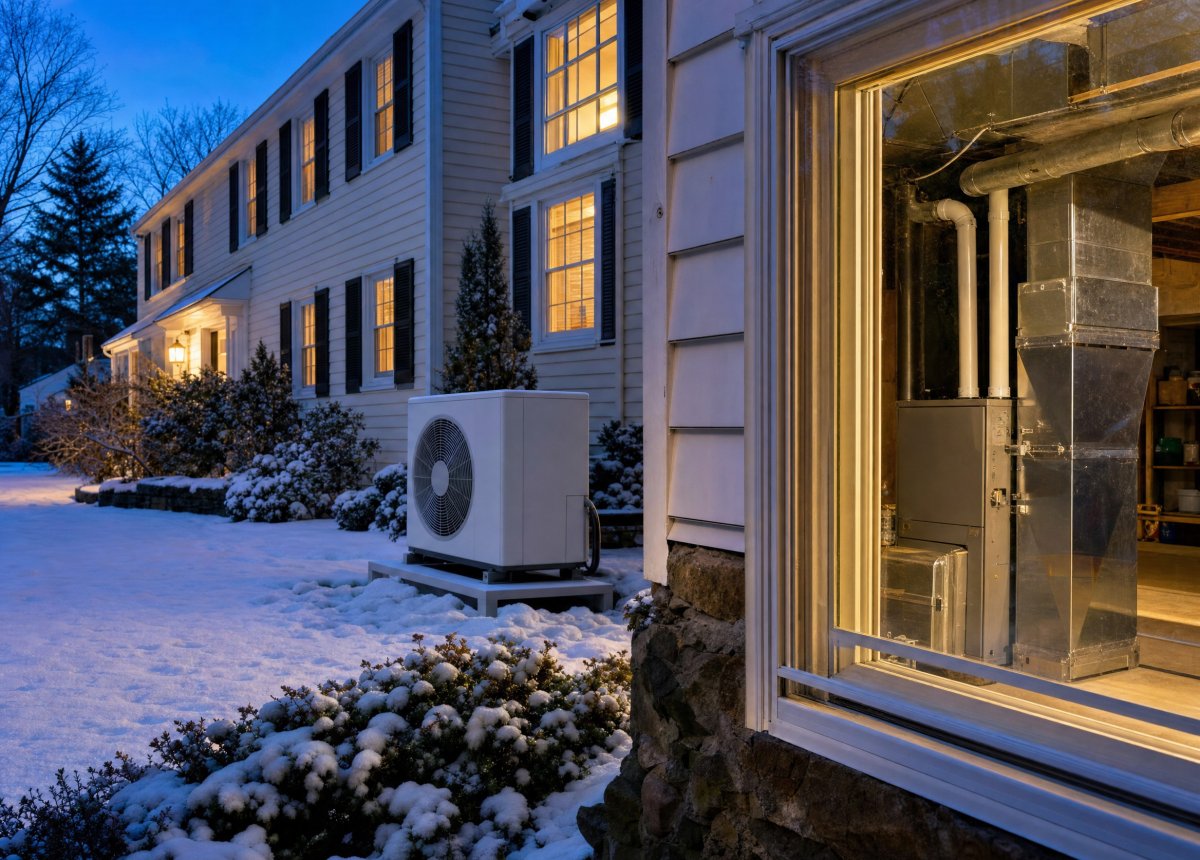
Here's a situation we see all the time. Your central air conditioner is on its last legs. Your gas furnace still runs fine, but your heating bills keep climbing. You're curious about heat pumps, but you're not ready to trust one alone on a February night when it's 10 below.
You don't have to choose. A dual fuel heat pump system in Binghamton gives you the efficiency of a heat pump for most of the year and the reassurance of a gas furnace on the coldest nights.
At Action Plumbing, Heating, and Cooling, we've been helping Southern Tier families heat their homes since 2006. As a family-owned Mitsubishi Diamond Contractor with NATE-certified technicians, we design and install these systems regularly. Here's how they work and whether one makes sense for your home.
What Is a Dual-Fuel System?
A dual-fuel system pairs two heat sources that share the same ductwork and thermostat. An outdoor heat pump handles cooling in the summer and most of your heating in the fall, spring, and milder winter days. Your gas furnace takes over when outdoor temperatures drop low enough that burning gas becomes the better option.
Because a heat pump also works as an air conditioner, this setup makes the most sense when your AC is due for replacement anyway. Instead of a standard air conditioner installation, you install a heat pump in its place and gain a second heat source in the process.
How the System Decides Which Heat Source to Use
Every dual-fuel system has a switchover point. That's the outdoor temperature where the system stops using the heat pump and fires up the furnace. It's often set somewhere in the 20s or low 30s, depending on your equipment, your home, and current gas and electric rates.
Your thermostat handles all of this automatically. On a 45-degree October afternoon, the heat pump quietly keeps the house comfortable. On a January night when it drops below zero, the furnace takes over. You never have to flip a switch.
Today's cold-climate heat pumps can carry more of the load than older models. That's largely thanks to inverter technology, which we explain in our post on inverter vs. fixed-speed compressors. Systems built on Mitsubishi Electric's cold-climate heat pump technology keep producing heat efficiently well into temperatures that older heat pumps couldn't handle.
Why Dual-Fuel Makes Sense for Southern Tier Homes
Our climate is a big part of why this approach works so well here. We have long, cool shoulder seasons and short stretches of extreme cold. Dual-fuel systems are built for exactly that pattern.
- Reliable backup heat. Your furnace is still there for the coldest nights of the year.
- Lower shoulder-season costs. The heat pump does the work in October, November, March, and April, when it's most efficient.
- Uses your existing ductwork. It's a natural fit for the 1960s through 1980s Colonials and split-levels common around Broome County.
- One upgrade, two benefits. You replace your AC and add an efficient heat source at the same time.
- Fuel flexibility. The switchover point can be adjusted as gas and electric prices change.
One common misconception is that dual fuel means paying for two full systems. If your AC needs replacing anyway, you're essentially upgrading that one piece of equipment. To see how gas and electric charges actually stack up, our guide to understanding your NYSEG bill is a helpful starting point, and current rates are available from NYSEG.
Learn more about how these systems fit your home on our heat pump services page and our ducted AC heat pump page.
Keep Your Current Furnace or Replace It Too?
It depends on the condition of your furnace. If it's relatively young, in good working order, and compatible with a heat pump coil, keeping it is often the most budget-friendly choice. If it's 15 or more years old and needing regular repairs, it may make more sense to replace both at once.
When a new furnace is the right call, we install dependable, cost-effective Heil furnaces that pair well with a heat pump. Our furnace installation and replacement team will help you weigh the options honestly. If you're on the fence about timing, our post on the best time to replace your furnace covers what to consider.
What if your home has a boiler instead of a furnace? Dual fuel requires ductwork, so it's usually not the right fit. Our comparison of boilers vs. furnaces for Southern Tier homes explains the differences, and Mitsubishi ductless mini splits are often a better way to add heat pump efficiency to a boiler-heated home.
When to Talk to a Professional
A dual-fuel system is worth considering if any of these sound familiar:
- Your central air conditioner is 12 or more years old
- Your furnace is in good shape, but your heating bills keep rising
- Some rooms run cold in winter and hot in summer
- You're planning to replace either your AC or your furnace soon
Every home is different, and the right setup depends on your ductwork, your furnace, and your budget. We serve homeowners throughout the area, from Binghamton heating and cooling customers to families looking for HVAC service in Kirkwood.
Is a Dual Fuel Heat Pump Right for Your Binghamton Home?
For many Southern Tier families, a dual fuel heat pump in Binghamton offers the best of both worlds: efficient heat for most of the year and dependable furnace backup when the temperature bottoms out. It's a practical, budget-conscious way to upgrade without giving up the security of gas heat.
Our team will assess your home, explain your options in plain language, and give you fair, transparent pricing. Call (607) 205-1177 or request your free estimate today.