Understanding Your NYSEG Bill: What Those Charges Really Mean
LouAnn Sheldon January 5, 2026 10 min read
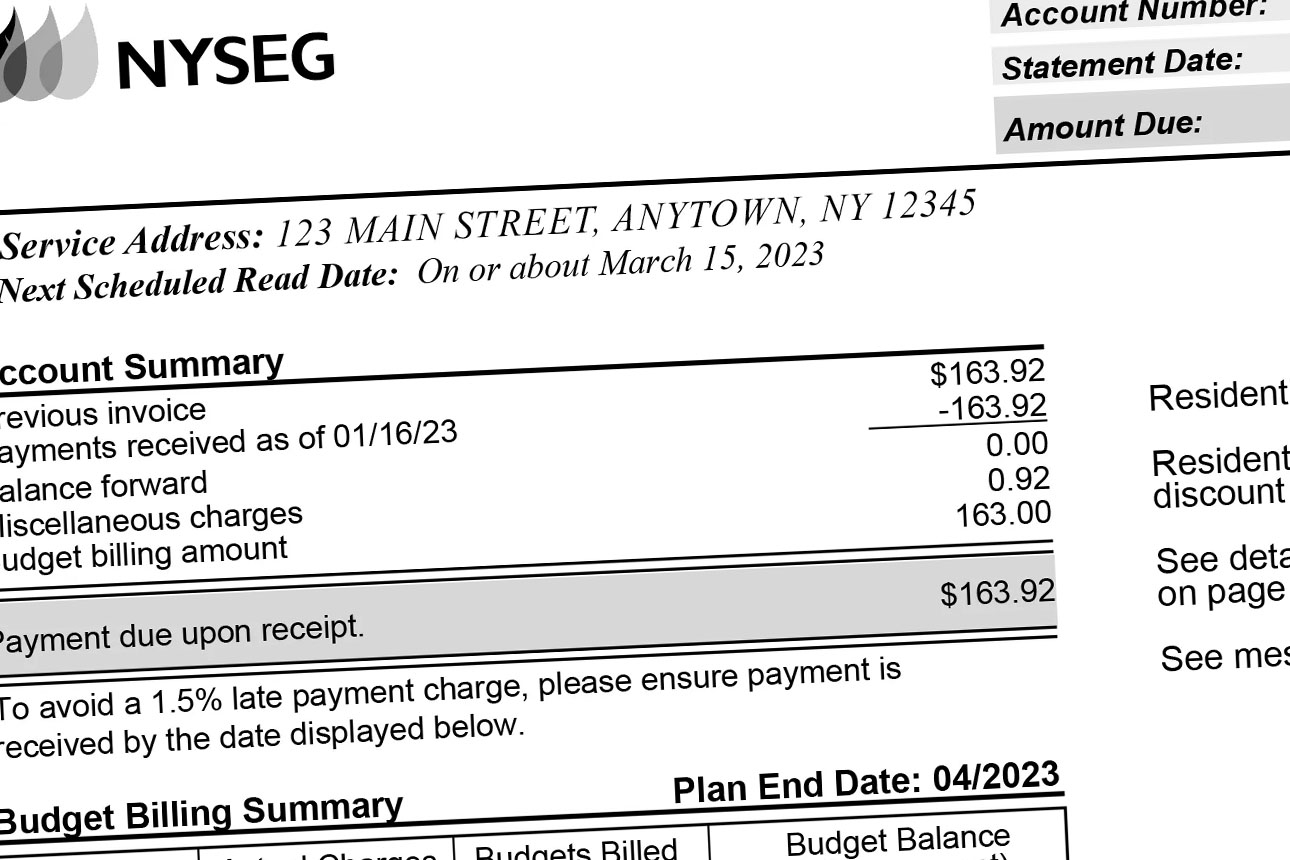
You open your NYSEG bill, see the total, and immediately feel that familiar frustration. But when you actually look at the detailed charges—delivery, supply, customer charge, merchant function charge—it reads like it's written in a foreign language. You're not alone. After nearly two decades serving Binghamton area homeowners, we at Action Plumbing, Heating, and Cooling hear the same questions every winter: "Why is my bill so high?" and "What are all these charges for?"
Understanding your NYSEG bill isn't just about satisfying curiosity—it's about taking control of your energy costs. When you know what you're actually paying for, you can make informed decisions about where to focus your efforts to reduce expenses. Let's break down your bill into plain English and, more importantly, show you what you can actually control to keep those costs manageable through our long Southern Tier winters.
The Two Main Components: Delivery and Supply
Your NYSEG bill is fundamentally divided into two parts, and understanding this distinction is crucial. Think of it like ordering a pizza: you pay for the pizza itself (supply) and you pay for someone to deliver it to your house (delivery). Both charges appear on one bill, but they serve different purposes.
Supply Charges: The Cost of Energy Itself
Supply charges represent the actual cost of the natural gas or electricity you consume. This is the commodity cost—what NYSEG pays to purchase or generate the energy before it ever reaches your home. These charges fluctuate based on wholesale energy markets, and they're measured in therms for natural gas or kilowatt-hours (kWh) for electricity.
For natural gas, you'll see this listed as "Gas Supply Charge" with a rate per therm. During winter 2024-2025, many Broome County residents are seeing supply rates between $0.60-$0.80 per therm, though this varies monthly based on market conditions. For electricity, supply charges typically range from $0.06-$0.10 per kWh, again depending on market fluctuations.
Here's what matters: while these rates change, you can't negotiate them. What you can control is how many therms or kilowatt-hours you actually use—and that's where the real savings opportunity exists.
Delivery Charges: Getting Energy to Your Home
Delivery charges cover everything NYSEG does to maintain the infrastructure that brings energy to your home. This includes the natural gas pipelines running under our streets, the electrical distribution lines, transformers, meters, maintenance crews, and customer service operations. These charges typically make up 40-50% of your total bill.
Delivery charges include several line items that often confuse homeowners:
- Delivery Charge: The base cost per therm or kWh for maintaining and operating the distribution system
- Customer Charge: A fixed monthly fee (usually $18-$25) that covers meter reading and account maintenance regardless of usage
- System Benefits Charge: Supports energy efficiency programs and assistance for low-income customers
- Revenue Decoupling Mechanism: A regulatory adjustment that stabilizes utility revenue
- Merchant Function Charge: Administrative costs for purchasing and managing energy supply
Yes, it's complicated. And yes, these delivery charges have increased in recent years as NYSEG invests in infrastructure improvements and responds to regulatory requirements. Unfortunately, like supply charges, you can't negotiate delivery rates—they're set by the New York Public Service Commission.
Understanding Your Usage: Therms and Kilowatt-Hours
The usage section of your bill shows how much energy you consumed during the billing period. For natural gas, this is measured in therms (one therm equals about 100 cubic feet of natural gas). For electricity, it's measured in kilowatt-hours (kWh).
What constitutes "typical" usage varies dramatically by season in the Southern Tier. During December through February, an average 2,000 square foot home in Vestal or Johnson City might consume 150-250 therms per month for heating. During summer months, that same home might use only 10-20 therms for water heating and cooking.
Here's the critical insight: your bill shows current usage compared to the same period last year. If your usage has increased significantly but your home's occupancy and habits haven't changed, that's a red flag. It typically indicates that your heating system is losing efficiency and working harder to maintain the same comfort level.
Seasonal Variations: Why Winter Bills Shock You
If you're like most Binghamton area homeowners, your winter natural gas bills are 4-6 times higher than summer bills. This isn't because NYSEG is charging you more—it's simply because heating your home through an Upstate New York winter requires substantial energy. When outdoor temperatures drop to -10°F or -15°F during those brutal February cold snaps, your furnace runs almost continuously to maintain indoor comfort.
The math is straightforward but unforgiving. A typical furnace might consume 80,000-100,000 BTUs per hour when running. At Binghamton's average winter temperatures, that translates to roughly 5-8 therms per day, or 150-240 therms per month. At current NYSEG rates (combining supply and delivery), that's $200-$350 just for heating—before adding water heating, cooking, and other natural gas uses.
This seasonal reality is why equipment efficiency matters so much. Even a modest improvement in heating efficiency can translate to $30-$60 monthly savings during peak winter months, which compounds to significant annual savings over a system's 15-20 year lifespan.
The Efficiency Factor: How Your Equipment Affects Every Bill
Here's what NYSEG won't tell you on your bill: the single biggest factor determining your winter energy costs isn't their rates—it's how efficiently your heating system converts fuel into warmth. Two identical homes on the same street can have wildly different energy bills based solely on equipment efficiency.
Understanding AFUE Ratings
Traditional furnaces are rated by Annual Fuel Utilization Efficiency (AFUE), expressed as a percentage. An 80% AFUE furnace converts 80% of the fuel it consumes into heat, with 20% lost through the exhaust. Many homes in Endicott, Vestal, and throughout Broome County still have furnaces with AFUE ratings between 60-80%—meaning up to 40% of the natural gas you're paying for literally goes up the chimney.
Modern high-efficiency furnaces and boilers achieve 95% or higher AFUE ratings. That efficiency improvement alone can reduce your winter natural gas consumption by 15-25%, translating directly to lower bills without sacrificing any comfort.
The Heat Pump Advantage
However, there's an even more efficient option that's become increasingly viable for Southern Tier winters: modern heat pump technology. Unlike furnaces that burn fuel, heat pumps move heat from outdoor air into your home—a process that's remarkably efficient even when temperatures drop well below freezing.
High-efficiency heat pump systems, like those from Mitsubishi, can deliver 2-3 units of heat for every unit of electricity consumed. This efficiency advantage means that even though electricity typically costs more per BTU than natural gas, heat pumps can often heat your home for comparable or even lower costs than traditional furnaces—especially at the moderate temperatures we experience during shoulder seasons.
More importantly, modern heat pumps now perform efficiently in extreme cold. The latest systems maintain excellent performance down to -13°F and continue operating down to -25°F, covering virtually all of Binghamton's winter weather. They also provide efficient cooling during summer, eliminating the need for separate AC equipment.
We've seen Binghamton area homeowners reduce their combined annual heating and cooling costs by 30-40% after switching from aging furnaces to high-efficiency heat pumps. While the upfront investment is significant, the monthly savings compound over time, and many families find the investment pays for itself within 7-10 years—even sooner when factoring in available rebates and incentives.
What You Can Control vs. What You Can't
Let's be direct about what's within your control and what isn't. You cannot negotiate NYSEG's supply or delivery rates. You can't change the fact that Upstate New York winters require substantial heating energy. And you can't eliminate your customer charges or system benefits charges.
What you can control:
- Equipment efficiency: Upgrading to high-efficiency heating and cooling systems dramatically reduces consumption
- System maintenance: Regular professional tune-ups maintain peak efficiency and prevent gradual performance decline
- Home envelope: Air sealing and insulation improvements reduce the heating/cooling load your equipment must handle
- Thermostat management: Smart temperature control strategies can reduce consumption by 10-15% without sacrificing comfort
- Water heating: Upgrading to tankless or heat pump water heaters reduces a significant portion of your annual energy use
- Ductless zone control: Ductless mini-split systems allow you to heat/cool only occupied spaces, eliminating waste
The homeowners who successfully manage their energy costs focus their efforts on these controllable factors. They view equipment upgrades not as expenses but as investments that generate monthly returns through lower utility bills.
Taking Advantage of Rebates and Incentives
Here's some welcome news: you don't have to bear the full cost of efficiency upgrades alone. NYSEG offers substantial rebates for high-efficiency heating and cooling equipment. New York State's Clean Energy programs provide additional incentives, and federal tax credits can cover up to 30% of equipment costs for qualifying systems.
For heat pump installations specifically, combined incentives can reduce your net investment by $2,000-$4,000 or more. These programs are designed to make efficiency upgrades more accessible to homeowners while reducing overall energy consumption across the region. Our team at Action Plumbing, Heating, and Cooling stays current on all available programs and can help you navigate the application process to maximize your savings.
These incentives aren't available indefinitely, and they can change based on funding levels and policy priorities. If you've been considering an upgrade, researching current incentive availability is a smart first step. Visit NYSEG's website to explore current rebate offerings for energy-efficient equipment.
Reading Between the Lines of Your Bill
Your NYSEG bill actually provides valuable diagnostic information if you know what to look for. Beyond the total amount due, pay attention to these indicators:
- Year-over-year usage comparison: Significant increases without corresponding weather changes suggest declining equipment efficiency
- Degree day adjustments: NYSEG shows heating degree days to help you understand whether usage changes reflect weather or other factors
- Daily average usage: Sharp spikes might indicate equipment problems or thermostat issues worth investigating
- Historical usage graph: Consistent increases over multiple years signal aging equipment that's struggling to maintain performance
If your bills show troubling patterns—especially if you're seeing 15-25% annual increases that can't be explained by rate changes or weather—it's time for a professional assessment. Our NATE-certified technicians can evaluate your heating and cooling systems, identify efficiency issues, and provide realistic cost-benefit analyses for repairs versus replacement.
Creating Your Long-Term Cost Management Strategy
Understanding your NYSEG bill is just the first step. The real value comes from using that knowledge to develop a strategic approach to managing energy costs over the long term. For most Southern Tier homeowners, this means:
- Scheduling annual maintenance for all heating and cooling equipment to maintain efficiency
- Budgeting for major equipment replacements before emergency failures force rushed, expensive decisions
- Prioritizing efficiency improvements based on your home's specific needs and equipment age
- Taking advantage of rebates and incentives while they're available
- Implementing simple conservation habits that reduce consumption without sacrificing comfort
The families we work with throughout Endwell, Windsor, and surrounding communities who take this proactive approach consistently report lower stress about energy bills. They've moved from reactive panic when bills arrive to confident control over their energy costs.
Take Control of Your Energy Costs
You can't change NYSEG's rates, and you can't change Binghamton's winter weather. But you absolutely can take control of how much energy your home consumes. Understanding your bill is empowering—it shows you exactly where your money goes and, more importantly, where you have opportunities to keep more of it.
At Action Plumbing, Heating, and Cooling, we've helped hundreds of Southern Tier families reduce their energy costs through smart equipment choices, professional maintenance, and strategic upgrades. We understand the unique challenges of heating and cooling homes in our region, and we're committed to providing honest assessments and practical solutions that fit real family budgets.
Whether you're ready to explore high-efficiency heating options, need a professional assessment of your current system, or simply want to understand your best path forward, we're here to help. Call us today at (607) 205-1177 or request a free estimate online. Let's work together to bring those energy bills under control.
Serving the Greater Binghamton area since 2006 with expertise you can trust and solutions that actually work. Your lower energy bills start with one phone call.