Tankless vs. Traditional Water Heaters: Which One Makes Sense for Your Southern Tier Home?
LouAnn Sheldon March 19, 2026 7 min read
When your water heater starts showing its age — maybe the hot water runs out faster than it used to, or you've noticed rust-colored water, or it's simply getting old — you're faced with a decision that every Southern Tier homeowner hits eventually: replace it with another traditional tank unit, or make the jump to tankless? It's not a simple "one is better" answer. Both types have real advantages depending on your household size, hot water usage, budget, and the specifics of your home.
At Action Plumbing, Heating, and Cooling, we install both tankless water heaters and traditional tank water heaters throughout Greater Binghamton and the surrounding communities. Here's an honest comparison to help you figure out which one fits your home and budget.
How Each System Works
A traditional tank water heater stores 40 to 50 gallons of water (sometimes more) and keeps it heated around the clock, ready for whenever you need it. When you turn on a hot water faucet, pre-heated water flows from the tank and cold water enters to replace it. The system continuously heats the water in the tank, even when nobody's using it — this is called "standby heat loss," and it's the biggest efficiency drawback of tank-style units.
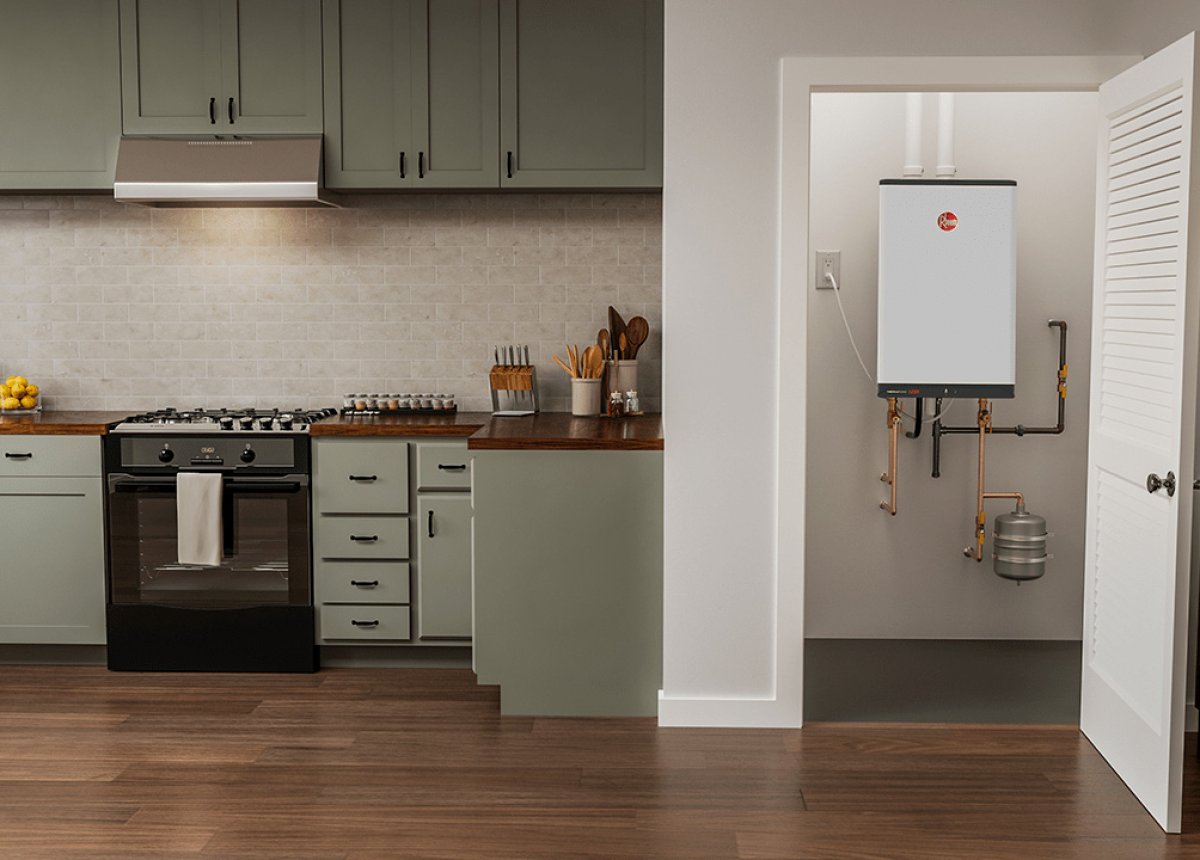
A tankless (or "on-demand") water heater doesn't store any water. Instead, it fires a powerful burner or electric element the moment you turn on the hot water, heating water as it passes through the unit. When you shut the faucet off, the system stops heating. No standby loss, no keeping 50 gallons hot while you're at work all day.
Comparing Costs: Upfront vs. Long-Term
One of the first things homeowners ask about is price, and this is where the two systems differ the most. Traditional tank water heaters have a lower upfront cost — both for the unit and installation. If you're replacing an existing tank unit with a similar one, the plumbing connections and venting are usually already in place, making installation straightforward.
Tankless water heaters cost more upfront. The unit itself is more expensive, and installation often involves upgrading the gas line (tankless units need higher gas flow than standard tanks), modifying venting, and sometimes adding electrical circuits. In an older Binghamton-area home that's never had a tankless system, installation costs can be noticeably higher than a like-for-like tank replacement.
However, tankless systems win on long-term operating costs. Because they only heat water on demand, they can reduce water heating energy costs by 24 to 34 percent for households that use 41 gallons or less per day — and 8 to 14 percent for higher-usage homes. Over the life of the unit, those savings can offset the higher upfront cost. Our post on why your energy bills keep rising explains how heating water is one of the biggest contributors to monthly utility costs, especially if your system is inefficient.
Lifespan and Maintenance
Traditional tank water heaters typically last 8 to 12 years. Our guide on water heater replacement signs covers what to watch for as your tank unit ages. The main enemies are sediment buildup at the bottom of the tank (which reduces efficiency and can cause premature failure) and anode rod deterioration (which leads to tank corrosion). Annual flushing and anode rod checks can extend the lifespan, but eventually the tank itself corrodes from the inside out.
Tankless water heaters generally last 20 years or longer with proper maintenance. They require annual descaling to remove mineral buildup — particularly important in areas with hard water, which is common in parts of Broome County. While the maintenance is different than a tank unit, a well-maintained tankless system will reliably outlast a tank by nearly a decade.
Which One Is Right for Your Home?
There's no one-size-fits-all answer, but here are some guidelines that apply well to the housing stock in the Southern Tier:
A traditional tank water heater may be the better choice if: you're replacing an existing tank unit and want to keep costs down, your hot water demand is moderate and predictable, your home's gas line and venting are set up for a tank, or you're planning to sell in the near future and want to keep the investment practical.
A tankless water heater may be the better choice if: you have a larger household that frequently runs out of hot water, you plan to stay in the home long enough to recoup the higher upfront cost through energy savings, you're doing a remodel or new construction where gas line and venting upgrades are already part of the scope, or space is a concern — tankless units mount on a wall and free up valuable floor space in small utility rooms and basements.
For homeowners interested in understanding how water heater efficiency connects to their broader energy picture, our post on understanding your NYSEG bill breaks down where your energy dollars actually go.
What About Whole-House Hot Water Demand?
One concern homeowners have with tankless systems is whether they can keep up with multiple fixtures running at once — say, someone showering while the dishwasher is running. This is a legitimate consideration. Tankless units are rated by flow rate (gallons per minute), and an undersized unit won't keep up with simultaneous high-demand use.
The key is proper sizing. A qualified installer will calculate your household's peak demand and recommend a unit (or in some cases, multiple units) that can handle your actual usage patterns. This is one of the reasons professional installation matters — a tankless system that's properly sized for your home will provide continuous hot water without the limitations homeowners sometimes worry about.
Let Us Help You Decide
The best water heater for your home depends on your specific situation — your household size, hot water habits, existing plumbing infrastructure, and budget. At Action Plumbing, Heating, and Cooling, we don't push one option over the other. We install both traditional and tankless systems and will give you honest, side-by-side information so you can make the choice that makes sense for your family.
We serve homeowners across Binghamton, Johnson City, Endwell, and the greater Southern Tier. Call us at (607) 205-1177 or request your free estimate online. We'll walk you through both options with transparent pricing — no pressure, no upselling.