Is Your Air Conditioner Ready for Summer? A Spring AC Tune-Up Checklist for Homeowners
LouAnn Sheldon May 2, 2026 9 min read
The first genuinely warm day of the year has a way of sneaking up on you. One afternoon it’s still jacket weather, and the next you’re reaching for the thermostat — only to find your air conditioner struggling, rattling, or refusing to cool the house down. For homeowners in the Southern Tier, where summers may be short but can still bring stretches of humid, 90-degree heat, discovering an AC problem in June is never good timing.
The good news is that most air conditioner failures are preventable. A simple spring tune-up — done before the cooling season starts — can catch small issues before they turn into expensive repairs, keep your energy bills in check, and give you the confidence that your system will actually perform when you need it. At Action Plumbing, Heating, and Cooling, we’ve been helping homeowners prepare their systems for summer since 2006, and we put together this checklist to help you know exactly what to look for — and what to leave to a professional.
Start with the Simple Stuff: What Homeowners Can Check Themselves
Not every part of a spring AC checkup requires a technician. There are several things you can inspect and address on your own before scheduling professional service. These steps take less than an hour and can make a real difference in how your system performs all summer.
- Replace the air filter. A clogged filter is one of the most common reasons air conditioners underperform. If you haven’t changed yours since last fall, now is the time. A fresh filter improves airflow, reduces strain on the system, and helps maintain better indoor air quality.
- Clear debris from the outdoor unit. Leaves, sticks, and other debris collect around the condenser over the winter. Clear a two-foot radius around the unit and gently rinse the fins with a garden hose (from the inside out) to remove built-up dirt.
- Check your vents and registers. Walk through the house and make sure all supply and return vents are open and unobstructed. Furniture pushed up against vents forces your system to work harder and can create uneven temperatures room to room.
- Test the thermostat. Switch your thermostat to “cool” and set it five degrees below the current room temperature. Give the system a few minutes to respond. If it doesn’t kick on — or if it takes a long time to do so — there may be an issue worth investigating.
- Inspect the condensate drain line. The drain line runs from your indoor air handler to a floor drain or outside. If it’s clogged with algae or debris, water can back up and cause damage. Pour a cup of diluted bleach down the line to keep it clear.
If you complete these steps and everything seems to be working, you’re in good shape. But there’s still more that a trained technician should handle annually — especially before the hottest months arrive.
What a Professional AC Tune-Up Actually Includes
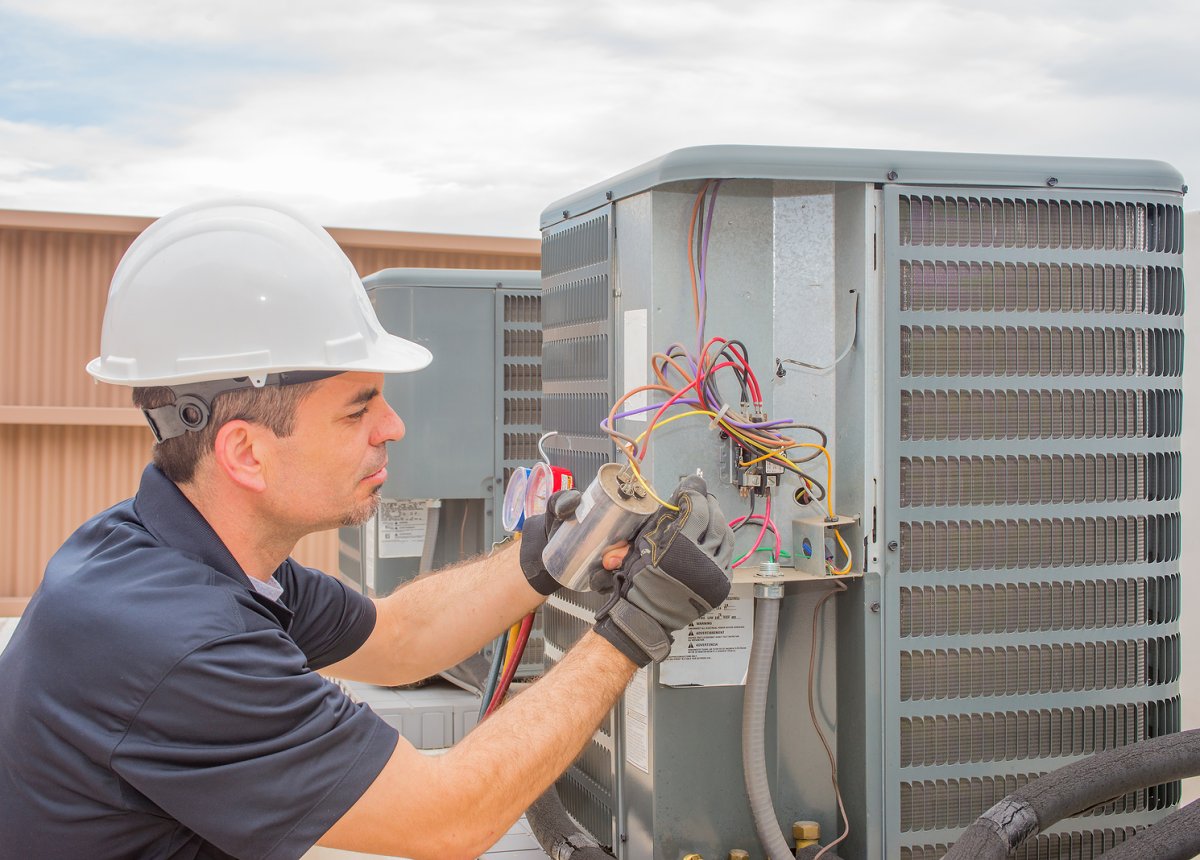
A professional AC tune-up goes well beyond what a homeowner can safely do on their own. Our NATE-certified technicians check the components that most affect system efficiency and longevity — the parts that quietly degrade over time and only reveal themselves as a breakdown on a hot July afternoon.
During a professional tune-up, a technician will inspect and test the refrigerant level and check for leaks, measure airflow across the evaporator coil, clean the condenser and evaporator coils, inspect electrical connections and capacitors, lubricate moving parts, and verify that the system is cycling correctly. Low refrigerant, for example, is something a homeowner has no way to diagnose or address — but it causes the compressor to work harder, drives up energy costs, and can lead to premature compressor failure if left unaddressed. Catching it in May is far better than discovering it during a heat wave.
If your home uses a ductless mini-split system for cooling, the tune-up process is somewhat different. Ductless systems require filter cleaning, coil inspection, and condensate drain checks specific to the indoor air handlers — something our team handles as part of seasonal maintenance visits.
Signs Your AC Needs More Than a Tune-Up
Sometimes a tune-up surfaces problems that go beyond routine maintenance. It’s worth knowing the warning signs that suggest your system may need air conditioner repair — or possibly replacement — before summer gets underway.
Watch for these red flags when you run your system for the first time this spring:
- Warm or weak airflow from the vents even after the system has been running for several minutes
- Unusual noises — grinding, squealing, or banging — when the unit starts up or shuts down
- A noticeable increase in your energy bills compared to the same time last year
- Ice forming on the refrigerant lines or the outdoor unit
- Humidity that feels excessive indoors even when the AC is running
These symptoms don’t always mean you need a full air conditioner replacement, but they do mean you shouldn’t wait. Our blog post on signs your AC needs repair or replacement can help you sort out which situation you’re dealing with. If your system is more than 15 years old and showing multiple symptoms, a replacement conversation may actually save you money in the long run — particularly when you consider the efficiency gains from newer equipment.
The Connection Between AC Maintenance and Your Energy Bills
One of the most practical reasons to keep up with annual AC maintenance is its direct impact on what you pay NYSEG every month. An air conditioner that’s running with dirty coils, low refrigerant, or a failing capacitor uses significantly more energy to produce the same amount of cooling — and that extra energy use shows up on your bill every month all summer long.
Studies consistently show that a neglected AC system can lose 5% or more of its efficiency each year without proper maintenance. Over a decade, that adds up to a system that’s working 50% harder than it should just to keep your house comfortable. If your energy costs have been creeping upward and you’re not sure why, our post on why energy bills keep rising is worth a read. Regular tune-ups are one of the most cost-effective ways to keep those costs under control without a major investment.
When to Call a Professional
If your AC hasn’t been serviced in more than a year, it’s time to schedule a tune-up — ideally before Memorial Day, when our schedule starts to fill up fast. You should also call us right away if your system won’t turn on at all, if you notice ice anywhere on the unit or refrigerant lines, if you smell burning or detect a chemical odor near the air handler, or if the system is short-cycling (turning on and off every few minutes). These aren’t situations to wait out. The sooner a technician can assess the problem, the more options you have and the lower the repair cost is likely to be.
Action Plumbing, Heating, and Cooling has been serving Greater Binghamton and the surrounding Southern Tier communities since 2006. Our NATE-certified technicians know the region’s climate, the housing stock, and the systems that are most common in homes throughout Broome and the surrounding counties. Whether you need a quick tune-up or a full AC installation, we’re here to help you head into summer with confidence.
Frequently Asked Questions About Spring AC Maintenance
Don’t wait until a heat wave to find out your AC isn’t ready. Call Action Plumbing, Heating, and Cooling today at (607) 205-1177 to schedule your spring AC tune-up, or request an estimate online. Our NATE-certified technicians serve Greater Binghamton and communities throughout the Southern Tier — and our schedule fills up fast once warm weather arrives, so the sooner you call, the better.