Burst Hoses, Slow Drains, and Utility Sink Backups: What Your Laundry Room Is Trying to Tell You
LouAnn Sheldon October 2, 2026 6 min read
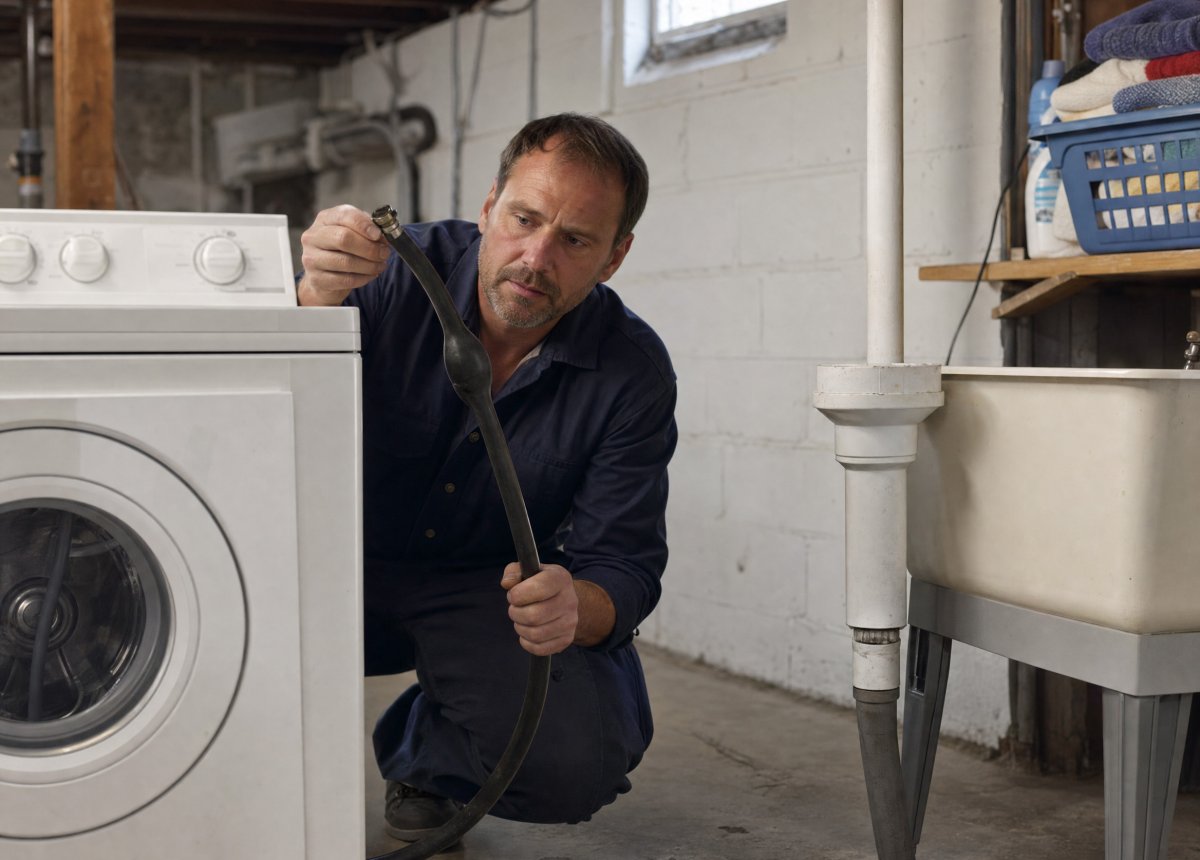
Most Southern Tier families don't think about the laundry room until something goes wrong. Maybe the washer drains into the utility sink and the water just sits there. Maybe you head downstairs on a Saturday morning and find a puddle spreading across the basement floor.
Fall is when the laundry really piles up, and more loads mean more lint and more strain on hoses and drains that may not have been checked since the washer went in.
Our family-owned team at Action Plumbing, Heating, and Cooling has been fixing laundry room drain clogs in Binghamton, Johnson City, and Endicott homes since 2006. In this guide, you'll learn the warning signs to watch for, the simple fixes you can handle yourself, and when a slow washer drain is pointing to a bigger problem further down the line.
The Washing Machine Hose: A Small Part With Big Consequences
The two supply hoses behind your washer are under constant water pressure, even when the machine is off. If the shutoff valves are left open (and in most homes they are), those hoses are holding back your home's full water pressure around the clock.
Standard rubber hoses get brittle with age, bulge near the fittings, and eventually split. When that happens, a hose can release hundreds of gallons of water in an hour. In a finished basement, that's ruined carpet, drywall, and anything stored on the floor.
Here's how to keep that from happening:
- Check both hoses every few months for bulges, cracks, or dampness around the fittings.
- Replace rubber hoses every 3 to 5 years, even if they look fine on the outside.
- Upgrade to braided stainless steel hoses, which hold up far better over time.
- Turn off the supply valves before you leave for a long weekend or vacation.
If your shutoff valves are crusty, seized, or dripping when you try to turn them, don't force them. Older valves can snap or start leaking once they're disturbed, and that's a job for professional pipe leak repair. A slow drip behind the washer is also one of the most common hidden water leaks Southern Tier homeowners miss until there's damage.
Why Your Washer Drain Is Slow (and What It Usually Means)
A washing machine doesn't drain gently. Its pump pushes water out fast, and if the standpipe or utility sink can't keep up, water backs up and overflows. Most of the time, the cause is one of these:
- Lint and fabric fibers. Synthetic fabrics shed fibers that collect in the drain trap and line, slowly narrowing the opening.
- Detergent buildup. Using too much detergent, or regular detergent in a high-efficiency machine, leaves a sticky residue that traps lint.
- Lost items. Socks, small toys, and coins can slip past the drum and lodge in the drain.
- An undersized drain. Many 1960s through 1980s homes were plumbed for older washers. Today's machines pump harder, and an old standpipe sometimes can't handle the volume.
If your washer drains into a utility sink, start with the cheap fix. A mesh lint catcher on the end of the discharge hose stops a lot of debris before it ever reaches the drain. Clean it after every few loads.
What you shouldn't do is pour a chemical drain cleaner down the standpipe. Those products don't dissolve lint well, and they can damage older pipes. We explain why in our post on why DIY drain cleaners do more harm than good. If cleaning the lint catcher doesn't help, our laundry room drain clearing service will get water moving without damaging your plumbing.
When the Problem Isn't Really in the Laundry Room
In many Southern Tier homes, the washer is one of the lowest drains in the house and sends more water down the line at once than almost any other fixture. That makes the laundry room the first place a main drain problem shows itself.
Pay attention if the basement floor drain backs up while the washer empties, if toilets gurgle during the spin cycle, or if several drains in the house are slow at the same time. Those are classic signs of a blockage in the main line, often from tree roots or an aging cast iron or clay pipe. Our guide to the telltale signs your sewer line needs attention covers the rest.
Consider two homeowners with the same problem. The first has the standpipe snaked three times in a year, and the backup keeps coming back. The second has the main line inspected, finds roots, and has it cleared with hydro jetting. The second homeowner spends less in the long run because the real problem actually gets fixed. If the line is damaged, sewer line repair is the permanent solution.
When to Call a Professional
Some laundry room issues are easy DIY fixes. Others need a trained plumber. Call for help if you notice any of the following:
- Water on the floor that you can't trace to a hose or connection
- A washer drain that still overflows after you've cleaned the lint catcher
- A floor drain or toilet that backs up when the washer drains
- Shutoff valves that are seized, corroded, or leaking
- Plans to move the washer or add a laundry area somewhere new
A new washer location needs the right drain size, venting, and water supply, which is why our appliance installation team handles the plumbing side, not just the hookup. We work throughout the area, from Johnson City plumbing service calls to homes across Endicott and Endwell.
Get Help With Laundry Room Drain Clogs in Binghamton
Replace aging hoses, keep lint out of the drain, skip the chemical cleaners, and watch for signs that the problem runs deeper than the laundry room. A few minutes now can save you from a soaked basement later.
When you need a hand, our NATE-certified, family-owned team offers fair, transparent pricing and honest recommendations. You can see what your neighbors have to say on our customer reviews page. Call us at (607) 205-1177 or request an estimate online, and we'll get your laundry room back to normal.