Central Air vs. Ductless Mini-Split: Which Is the Right Choice for Your Home Addition or Sunroom?
LouAnn Sheldon May 12, 2026 8 min read
Spring is the season of home improvement plans. After a long Upstate winter spent looking at the same four walls, it’s natural to start thinking about that sunroom you’ve been wanting, finishing the bonus room above the garage, or finally making the workshop or studio space actually usable year-round. The planning feels exciting — right up until you ask the question nobody wants to answer: how are you going to heat and cool it?
For many homeowners, the instinct is to extend the existing central HVAC system. It’s familiar, it’s already in the house, and it seems straightforward. But in a lot of cases — especially in the older homes common throughout the Southern Tier — extending central air into a new space is neither the most practical nor the most cost-effective solution. Ductless mini-split systems have become the go-to choice for exactly these situations, and for good reason. This post breaks down the real differences between the two options so you can make an informed decision before the project begins.
The Case for Extending Central Air
If your existing central air conditioning system has sufficient capacity and your ductwork is accessible, extending it into a new space can be a clean solution. You end up with a single, unified system controlled from one thermostat — no new equipment to learn, no separate maintenance schedule, and no additional outdoor unit to find space for.
That said, “if” is doing a lot of work in that sentence. Many homes in the Southern Tier were built in the 1960s, ’70s, and ’80s with HVAC systems sized for their original footprint. Adding square footage to the load can push an aging system past its comfortable operating range, leading to temperature inconsistencies throughout the house — not just in the new space. New ductwork also has to go somewhere, and in additions with sloped ceilings, finished walls, or limited access, routing ducts can be expensive and disruptive.
There’s also the question of efficiency. Duct systems lose a meaningful portion of conditioned air to leakage and heat transfer — industry estimates put average duct losses at 20–30% for systems in unconditioned spaces. An addition over an uninsulated garage is a prime example of where those losses compound. If you’re already dealing with rising energy bills, adding more ductwork may not be the answer.
Why Ductless Mini-Splits Are Often the Better Fit
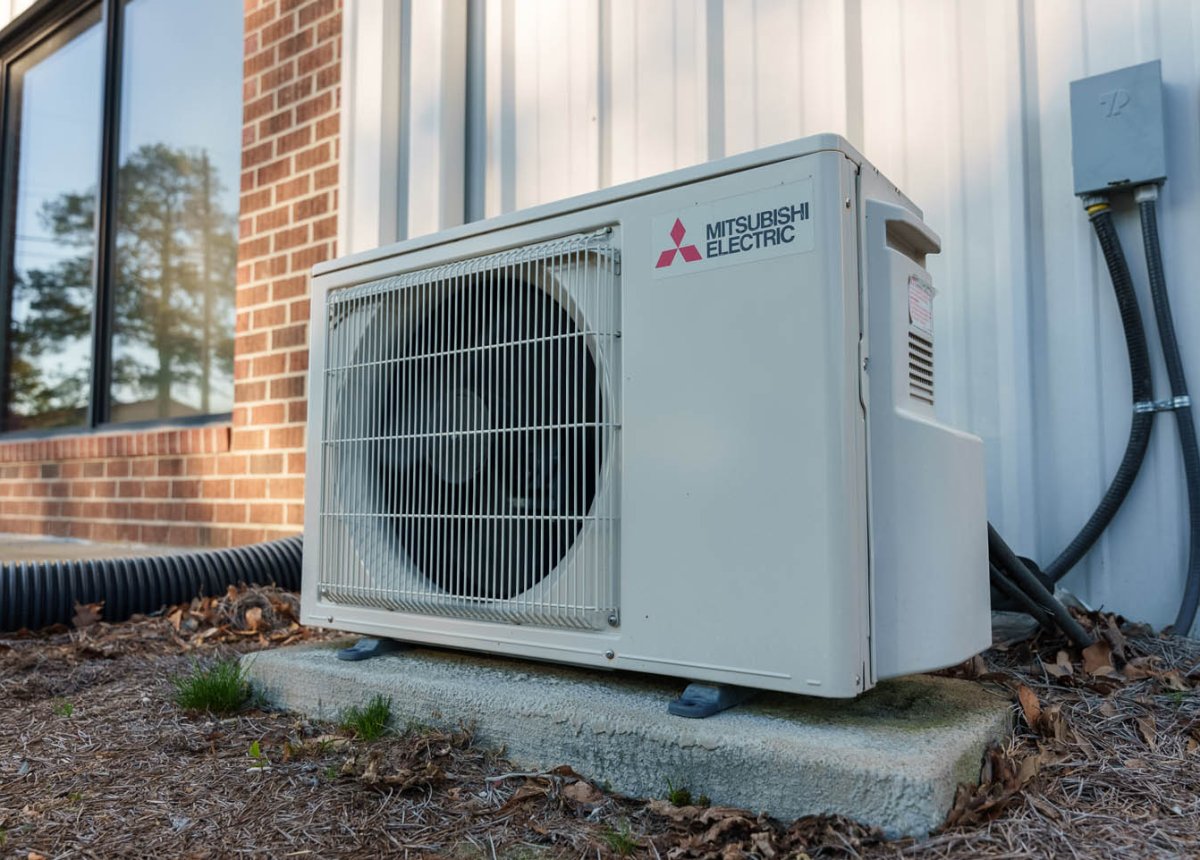
A ductless mini-split system consists of a compact outdoor compressor unit connected to one or more indoor air handlers by a small refrigerant line that runs through a three-inch hole in the wall. There’s no ductwork required. Installation is minimally invasive, typically completed in a day, and doesn’t require tearing into walls or ceilings to route trunk lines.
For additions and bonus spaces, this matters enormously. A sunroom with cathedral ceilings, a garage apartment with limited wall space, or a finished room above an attached garage all present real challenges for traditional ductwork — and none of them for a ductless system. The indoor air handler mounts high on the wall, delivers conditioned air directly into the space, and operates independently of the rest of your home’s HVAC.
Action Plumbing, Heating, and Cooling installs Mitsubishi ductless mini-split systems, which are widely regarded as the premium standard in the industry. Mitsubishi’s Hyper-Heating (H2i) technology is specifically designed to operate efficiently even in the kind of deep cold that the Southern Tier sees in January and February — making these systems genuinely capable of year-round use, not just summer cooling. That’s a significant advantage over solutions that only address one season.
Efficiency and Cost: How the Numbers Actually Compare
Ductless systems consistently outperform central air on efficiency metrics, particularly in applications like additions where duct losses would otherwise be significant. Mitsubishi mini-splits carry SEER ratings (a measure of cooling efficiency) that frequently exceed 20, compared to 14–18 for most central systems. Over a cooling season, that difference shows up on your NYSEG bill.
The upfront cost of a ductless installation is typically higher than extending existing ductwork when the ductwork routing is simple. But when you factor in the cost of duct fabrication and installation in a difficult space, any required upgrades to your existing air handler or furnace to handle the added load, and the efficiency difference over the life of the system, ductless often comes out ahead. New York State also offers rebates for qualifying heat pump installations — our post on NY heat pump rebates in 2026 covers the current incentive landscape in detail and is worth reading before you finalize your budget.
For a deeper look at the long-term savings math, our post on calculating your ROI when upgrading to a ductless system walks through a realistic comparison for Southern Tier homeowners.
Which Spaces Are Best Suited for Ductless?
While ductless systems work well in almost any application, they’re particularly well-suited for certain types of spaces that commonly come up in home addition projects:
- Sunrooms and three-season rooms — These spaces have large glass areas that gain heat quickly in summer and lose it fast in winter. Independent temperature control through a ductless system lets you condition the room only when it’s in use, rather than running the whole-house system harder.
- Rooms above garages — Garage spaces are notoriously hard to condition through central systems due to thermal bridging and limited duct access. A mini-split handles this cleanly without compromising the comfort of the rest of the house.
- Home offices and studios — Spaces that are used on different schedules than the rest of the house benefit from independent control. You can condition just the office without cooling the whole second floor.
- Finished basements — Basements present their own ductwork challenges, and their naturally cooler temperatures make independent control more efficient than tying them into the central system.
Our detailed post on ductless mini-splits for home additions and bonus rooms covers many of these scenarios with additional detail if you want to dig deeper before your consultation.
When to Call a Professional
If you’re planning a home addition or finishing a bonus space, the time to think about heating and cooling is before construction begins — not after the walls are closed. The right system choice can influence how the space is framed, where electrical capacity needs to be added, and how the outdoor unit is positioned relative to the addition. Getting a professional assessment early avoids costly changes later. Our team can evaluate your existing system, assess the new space, and give you an honest recommendation on whether extending central air or installing a ductless system makes more sense for your specific situation.
Action Plumbing, Heating, and Cooling has been serving Greater Binghamton and the Southern Tier since 2006. We install Mitsubishi ductless systems and central AC systems and can help you navigate the decision with straightforward guidance and transparent pricing. See why homeowners throughout the region trust us on our customer reviews page.
Frequently Asked Questions About Ductless vs. Central Air for Additions
Planning a home addition or finishing a bonus space this spring? Talk to Action Plumbing, Heating, and Cooling before the project gets underway. Call us at (607) 205-1177 or request an estimate online. We’ll help you choose the right system for your space and your budget — and get it installed right the first time.